Explore.
Leave the base behind. Travel across the lunar landscape and find your next place to work.
Independent game · In development
Explore. Mine. Build. Race.
Your journey starts on the Moon. Control your astronaut, mine, build and race — beneath a sky grounded in real astronomy. Discover the worlds beyond as MOON: CRATERFORGE grows.
Discover the game Follow development on TikTok ↗Planned for PC + Android
In development since October 2026
01 / Life beyond Earth
From the first rock you drill to the rover you take out for a race. A world built around getting out there and doing things yourself.
Leave the base behind. Travel across the lunar landscape and find your next place to work.
Control your astronaut and hand drill, or bring the drilling rig. Extract lunar resources and haul them back to base.
Put your resources to work. Develop your base and assemble shaft platforms, supports, railings and energy components.
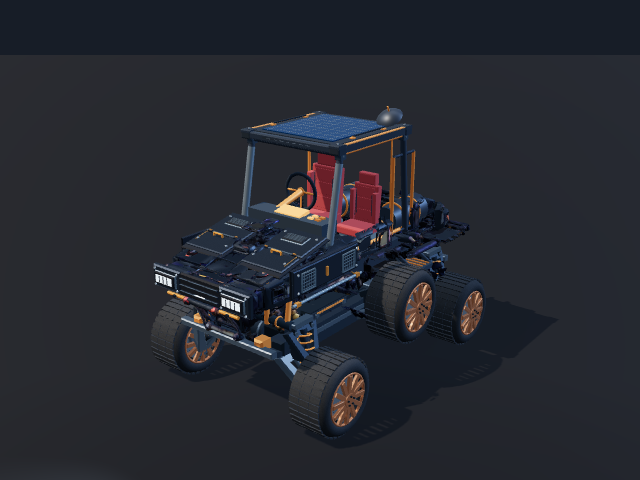
Race lunar circuits and push for better results. Timed runs are already in the development build; competitive events and leaderboards are planned as the racing system grows.
Below the surface
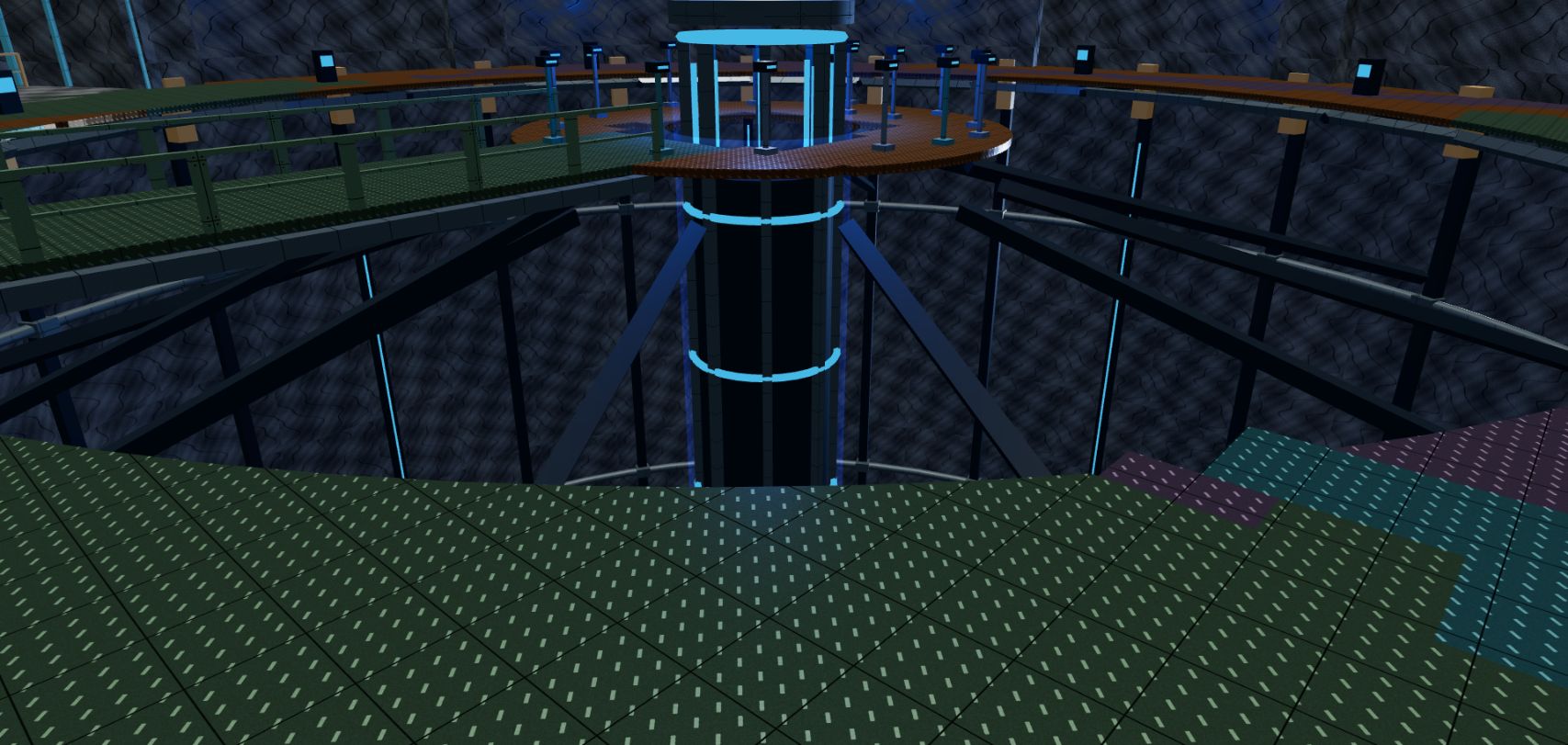
Explore the shaft on foot. Place construction parts, connect energy components and use your boots to control your descent.
Player-built shaft · Development scene view
02 / From the development build
Game captures and scene views. The visuals and systems continue to evolve.
03 / Look beyond the horizon
The Moon is where you begin. Look up, explore the atlas and get to know the Solar System and the seven planets of TRAPPIST-1.
A sky grounded in astronomy
The lunar sky uses astronomical calculations for the positions and phases of celestial bodies. The star map follows the observer’s view from the Moon.
The Sun, Earth and planets are placed using the sky model and simulation time.
A catalogue-based star field and an aligned galactic plane give the sky its structure.
Your lunar viewpoint shapes the horizon and the bodies visible above it.
Background: NASA/SVS star map used in the game. This presentation is not a live sky view.
Two systems in the development atlas. A growing journey that blends astronomical knowledge with a fictional adventure.
IN THE DEVELOPMENT ATLAS
Explore the Sun and planets in the atlas, from Earth to Saturn’s rings. Compare the worlds that share our Solar System.
SEVEN WORLDS IN THE ATLAS
Meet all seven TRAPPIST-1 planets. Their surfaces are artistic interpretations: their real terrain, oceans and life remain unknown.
A glimpse of what lies ahead
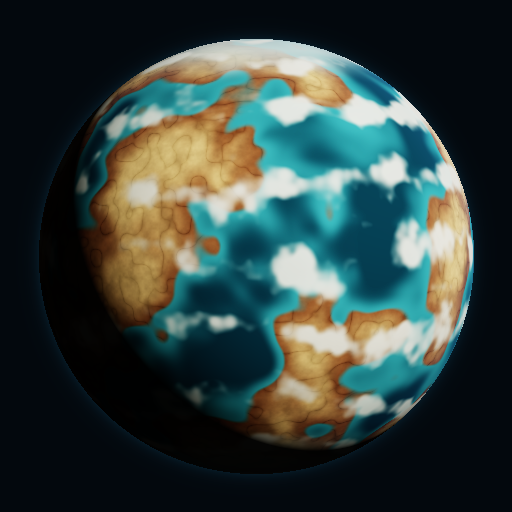
Auralė is the game’s imagined world connected to TRAPPIST-1 e. Surface exploration and interplanetary travel are being explored in development experiments.
Auralė’s landscapes and interstellar travel are science fiction. Atlas entries do not mean every planet has a playable landing.
Astronomy is the foundation; the adventure takes creative liberties. Planet appearances, travel and gameplay are adapted for the game. Development footage and experiments may change.
Visual sources & credits ↓Explore. Mine. Build. Race.
04 / Follow the journey
Development captures, new machines and small discoveries along the way. Follow MOON: CRATERFORGE as it grows.
Before launch
MOON has been in development since October 2026. CRATERFORGE is the current public name of the project.
The game is in development. A public release date has not been announced.
PC and Android are planned. Store pages and download links will be added when they are ready.
The current target is around €13. Pricing and regional availability will be confirmed before release.
The lunar sky uses astronomical calculations, and the atlas includes real Solar System and TRAPPIST-1 objects. Unknown planetary surfaces are artistic interpretations. Auralė and interstellar travel are fictional; this is a game, not a scientific navigation simulator.
Everything shown here comes from development. Features, visuals and platform plans may change as work continues.
Atlas captures and Auralė portrait: MOON development assets. The captures show an earlier development experiment.
NASA/Goddard SVS · Deep Star Maps (2012)
Solar System Scope / INOVE · Planet textures · CC BY 4.0
The star map is displayed as a background in this website. Game portraits and atlas captures use illustrative rendering. No NASA affiliation or endorsement.
Get in touch
Questions, collaboration or press? Write to us.